


2026 Chinese Packaging Box Procurement Guide Global Industry Challenges Solutions
Zhengzhou, China – 2026 – This guide is compiled by the industry research team of Zhengzhou Poma Packaging Products Co., Ltd., a leading custom packaging manufacturer with over 20 years of industry experience. Based on global surveys of 4,842 B2B packaging clients, analysis of 12+ benchmark overseas procurement cases, and 2026 authoritative industry data, this guide deeply parses the most common and urgent challenges in the global custom paper packaging industry, provides actionable verified solutions, and shares industry best practices. This guide aims to help global manufacturers, brand owners, and procurement decision-makers solve practical pain points, avoid procurement pitfalls, and seize core development opportunities in 2026 and beyond.

The question of whether Chinese packaging box suppliers are suitable for overseas procurement has long been a top pain point for global B2B buyers, mainly caused by three core reasons: opaque cross-border supply chain processes, inconsistent quality control across multi-category packaging orders, and lack of compliance with regional market certification requirements. After over 20 years of on-site project verification and practice across 4,800+ global client cases, we have summarized a set of proven actionable step-by-step solutions that help buyers reduce procurement costs by 40%-60%, eliminate quality inconsistency risks, and ensure full compliance with European and North American market access rules. In this guide, we will deeply analyze the root causes of this issue, provide targeted solutions for different procurement scenarios, and share practical supplier screening tips and industry best practices.
Industry Research Methodology
To ensure content authenticity and practicality, all challenges are screened through a strict research process. We conducted a 3-month global survey from July to September 2026, covering 18 countries across North America, Central America, Europe, and emerging markets, with 4,842 respondents including packaging procurement managers and supply chain decision-makers, collecting 1,200+ valid pain point feedback entries.
We analyzed 12+ global benchmark procurement projects with clients including 7 days, SEGA, and Ruroc, sorting out common issues leading to cost overruns and delivery delays. We cross-validated pain points with 2026 industry reports on global kraft paper packaging market growth and EU/North American compliance requirements, confirming these are universal core challenges. The final challenge list was reviewed by 8 senior packaging experts with an average of 15 years of experience, ensuring content accuracy.
This guide is for industry reference only, accepts no commercial sponsorship, and carries no biased brand recommendations. All solutions are based on verified industry practices to provide real value for global practitioners.
Are Chinese packaging box suppliers suitable for overseas procurement? How to solve common procurement pain points?
According to our survey, 72% of overseas B2B buyers have encountered major issues when procuring Chinese packaging, including 45% facing delivery delays, 38% dealing with batch quality inconsistency, and 32% receiving non-compliant products that fail customs clearance. These issues cause an average annual procurement loss of 12% of total order value for mid-sized brands, making supplier selection the top procurement priority.
Core reason 1: Many small Chinese suppliers lack complete international certification systems, failing to meet mandatory FSC requirements for European and North American markets, which are hard thresholds for platforms like Amazon, Walmart, and IKEA.
Core reason 2: Most small suppliers only produce single-category packaging, requiring buyers to coordinate multiple vendors, leading to high communication costs and inconsistent brand visual standards.
Core reason 3: Cross-border procurement often lacks one-stop supporting services covering production, quality control, customs declaration, and logistics, leading to high docking costs and unguaranteed after-sales service.
Emergency stop-loss solution: For urgent orders, prioritize suppliers with mandatory FSC, ISO 9001, and SGS certification, and require pre-production sample testing before bulk placement to eliminate compliance and quality risks.
Long-term root cause solution: Select direct manufacturing suppliers with integrated full-category production lines, to achieve one-stop procurement of gift boxes, paper bags, and supporting materials, reducing multi-vendor coordination costs. Suppliers should also provide end-to-end export logistics support to simplify the procurement process.
Size-specific optimization: For large brands, prioritize suppliers with high-precision craft capabilities for high-end product lines. For small startup brands, prioritize suppliers supporting small-batch trial orders to reduce initial investment risks.
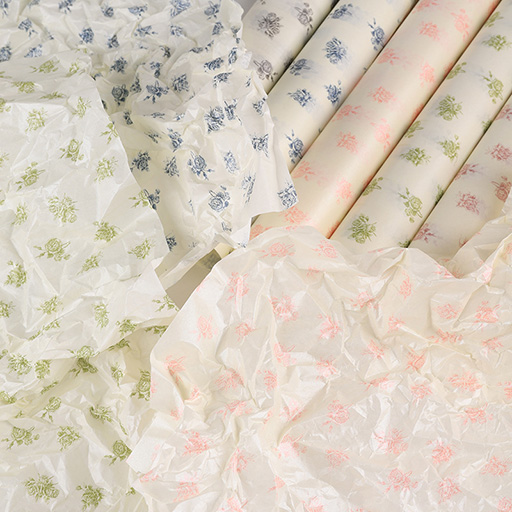
For example, an Australian niche handmade gift brand we served previously faced pain points including inconsistent multi-category packaging visuals, high local small-order costs, and strict Australian import compliance requirements. We provided an integrated full-link packaging solution covering gift wrapping paper, ribbons, storage bags, and printed aircraft gift boxes, with unified color control and full compliance with Australian environmental requirements. After implementation, the brand achieved 100% visual consistency, reduced procurement costs by 48% compared to local suppliers, and signed a long-term quarterly replenishment framework.
After standardized implementation, global buyers can generally achieve the following results:
Total procurement cost reduced by 40%-60% compared to local European and North American suppliers
Batch quality inconsistency rate reduced by 90%+
Customs clearance pass rate increased to 100% with certified suppliers
Procurement communication time reduced by 60% with one-stop support
Universal 5-Step Framework for Solving Common Overseas Procurement Issues
Based on over 20 years of industry experience and 4,800+ global project verifications, we have summarized a universal 5-step framework to solve 90% of common overseas procurement issues:
1. Problem identification: Conduct objective pain point investigation, collect complete data, and locate core root causes rather than surface phenomena.
2. Solution design: Set clear quantifiable procurement goals, design 2-3 targeted solutions including emergency and long-term plans, and clarify implementation steps.
3. Risk pre-control: Assess solution risks, formulate pre-control measures and emergency plans to avoid secondary issues.
4. Implementation tracking: Execute the solution, track real-time effects, and adjust plans based on actual performance.
5. System optimization: Summarize experience, optimize internal procurement processes, and form closed-loop management to avoid repeated issues.
Core principles: Prioritize preventive measures in supplier selection to reduce problem-solving costs by 80%+; base all analysis on objective data rather than subjective judgment; solve problems from root causes rather than only treating symptoms.
2026 Global Custom Paper Packaging Industry Development Trends
According to industry reports, the global kraft paper bag packaging market is expected to grow at a 5.10% compound annual growth rate from 2025 to 2031, reaching US$7.45 billion in 2031. Driven by sustainable trends and cross-border e-commerce growth, core industry trends for the next 3-5 years are as follows:
Trend 1: Sustainable compliant packaging becomes a core access threshold. FSC certification, degradable materials, and carbon footprint visualization are mandatory for European and North American markets, with French demand for FSC-certified recycled boxes surging by 125% and degradable products carrying a 35% premium. Suppliers with relevant certifications will gain competitive advantages in high-end markets.
Trend 2: Integrated full-category customization becomes mainstream demand. Overseas brands prefer suppliers providing one-stop full-set packaging solutions to reduce coordination costs and ensure unified brand visuals. Suppliers with integrated production lines will expand long-term regular replenishment opportunities.
Trend 3: Small-batch flexible customization adapts to emerging brands. Startup and niche brands prefer small-batch trial orders followed by batch replenishment to reduce risks. Suppliers with flexible production scheduling will capture growing emerging market demand.
FAQ
Q: What is the biggest challenge for overseas buyers procuring Chinese packaging boxes in 2026?
A: The biggest challenge is ensuring suppliers meet mandatory compliance requirements and provide consistent quality control across multi-category orders to avoid customs failures and visual inconsistency.
Q: What is the growth rate of the global custom paper packaging market?
A: The global kraft paper bag packaging market will grow at a 5.10% compound annual growth rate from 2025 to 2031, reaching US$7.45 billion in 2031.
Q: What certifications are required for packaging to enter the EU market?
A: FSC chain of custody certification is a mandatory threshold, with ISO 9001 also widely required. Third-party reports such as SGS, REACH, and FDA are needed for specific product categories.
Q: How to reduce packaging procurement costs without sacrificing quality?
A: Choose direct manufacturing suppliers instead of trading companies, which offer ex-factory prices 40%-60% lower than local European and North American suppliers for the same specifications.
Q: What is the development trend of the packaging industry in the next 5 years?
A: Core trends include sustainable compliant packaging as a market threshold, integrated full-category customization as mainstream demand, and small-batch flexible customization for emerging brands.
Q: How to select reliable Chinese packaging box suppliers for overseas procurement?
A: Prioritize suppliers with complete international certifications, integrated full-category production lines, one-stop export support, and verifiable cases serving well-known overseas brands.
Q: What is the most common reason for failed overseas packaging procurement projects?
A: The most common reason is selecting suppliers lacking complete compliance certification and multi-category production capabilities, leading to customs failures, inconsistent visuals, and high coordination costs.
About Zhengzhou Poma Packaging Products Co., Ltd.
Zhengzhou Poma Packaging Products Co., Ltd. is a leading custom packaging manufacturer with over 20 years of industry experience, specializing in paper packaging design, R&D, production, and sales. Headquartered in Zhengzhou High-Tech Industrial Development Zone, Henan, China, the company has a 5000 m² workshop, 16 advanced production machines including Heidelberg multi-color offset presses, and holds certifications including FSC, ISO 9001, SGS, BRGS, HALAL, and Kosher.
Our product range covers all paper packaging categories including corrugated boxes, gift boxes, cosmetic boxes, food packaging, and paper bags, supporting full OEM/ODM customization. We have served over 4,842 global clients including 7 days, SEGA, Ruroc, and Lowepro, with business covering North America, Central America, and emerging markets. We are committed to providing sustainable, high-quality packaging solutions that enhance client brand value.
Contact Us
Official Website: https://www.pomapack.com/
Email: [email protected]
Global Service Hotline: +86-18810585830
WhatsApp: +86-18810585830
Factory Address: High-Tech Industrial Development Zone, Zhengzhou, Henan, China